
Valsad
Kesar
Mango
The Queen of Mangoes, from our orchard to your table
Tree-ripened on our Valsad farm. No carbide. No shortcuts. Pure saffron sweetness — harvested at the exact moment of ripeness and delivered to you within 3 to 4 days.
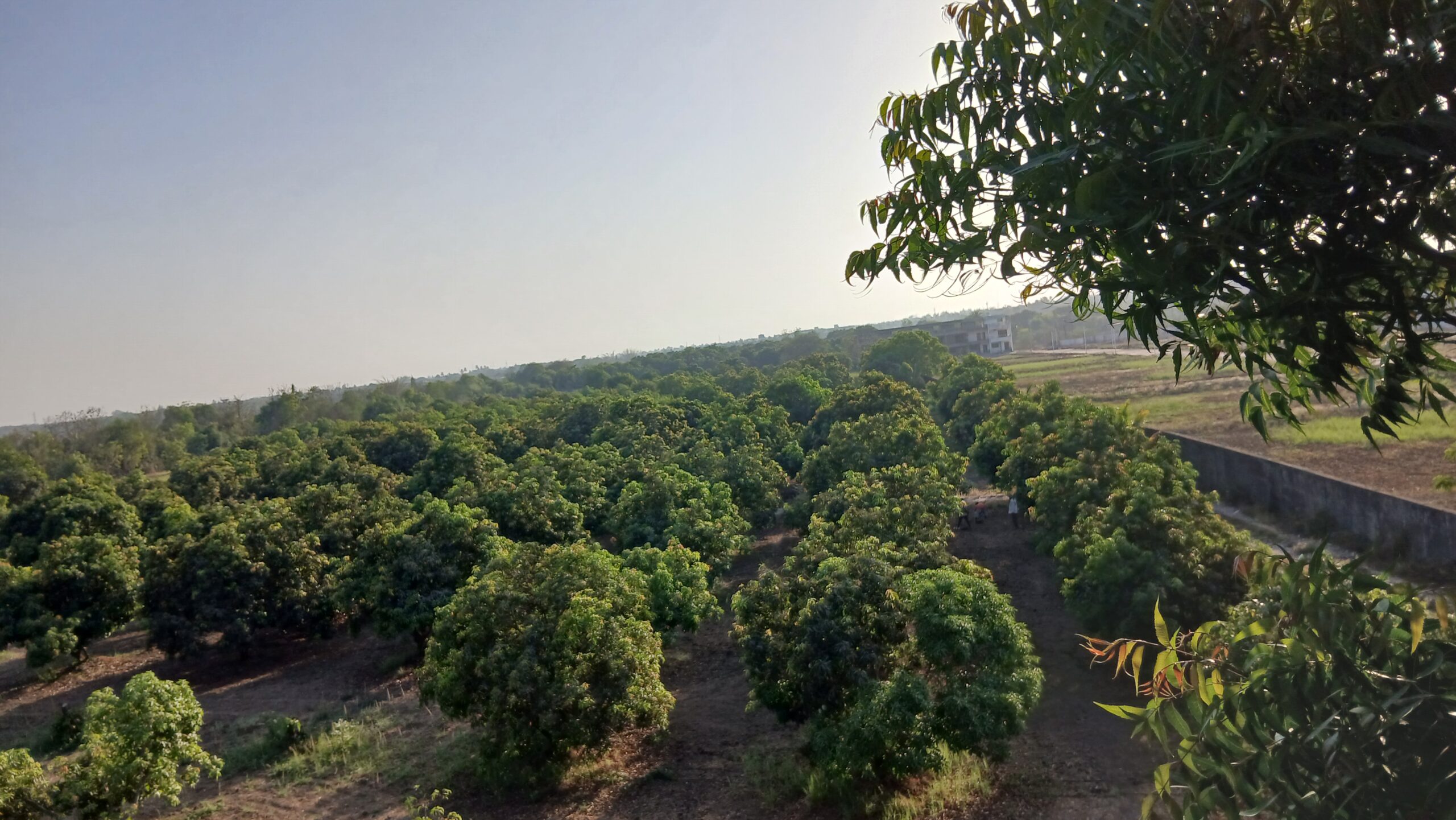 Vanamrit Farm, Gujarat
Born from
coastal soil
The Kesar mango of Valsad grows just kilometres from the Arabian Sea. The salt breeze, warm nights, and mineral-rich red laterite soil combine to concentrate natural sugars in a way that inland orchards simply cannot replicate.
At Vanamrit, we follow generations of South Gujarat farming tradition — every mango is hand-picked at exact ripeness, carbide-free, and delivered farm-fresh to your door.
"Once you taste a Valsad Kesar, every other mango feels like an imitation."
Key characteristics
Flavour
at a glance
When to
order
"Every Kesar is hand-picked at the exact moment of ripeness — never before, never after. That is the only shortcut we refuse to take."
— Vanamrit Farms , Gujarat
Six ways to savour Kesar
Aamras with Puri
Thick Kesar pulp alongside hot, crisp puris. The classic Gujarati summer pairing — rich, golden, and deeply satisfying.
Gujarati classicChilled, as-is
Refrigerate for two hours and eat straight with a spoon. No knife needed. Just the fruit, as nature intended it.
Purest formMango Shrikhand
Fold Kesar pulp into hung curd with cardamom and saffron. A dessert that needs almost no recipe.
DessertMango Lassi
Blend with cold yoghurt and a touch of rose water. Kesar's natural sweetness means barely any added sugar is needed.
DrinkMango Ice Cream
Pure Kesar pulp churned with cream. The saffron colour, the floral aroma — no artificial flavour comes close.
Frozen treatMango Kulfi
Set Kesar pulp with condensed milk and cardamom overnight. The density of kulfi perfectly complements the fruit's lightness.
Summer favouriteWhat the land
gives the fruit
Coastal microclimate
The Arabian Sea breeze keeps night temperatures warm, concentrating natural fruit sugars to levels inland orchards can't match.
Red laterite soil
Iron-rich soil deepens the saffron colour and gives Valsad Kesar its characteristic golden intensity.
No carbide, ever
Every mango is tree-ripened only. Harvested when nature is ready — not when the market demands.
Farm direct, no middlemen
From our orchard to your doorstep in 48 hours. No delays, no extra handling, no compromise on freshness.
Goodness in every bite
Per 100g of Kesar mango
Order this season's
Kesar harvest
Limited boxes each week. Delivered farm-fresh from Valsad within 48 hours of harvest. Season runs May to July — pre-book now.
Valsad Kesar Mango — Gujarat's Best Kept Secret That Deserves Far More Credit
You've heard of Gir Kesar. You've probably eaten Alphonso. But if you've never tried a Valsad Kesar mango straight from a South Gujarat orchard, you've been missing one of the most quietly extraordinary things Indian summers have to offer.
What exactly is the Valsad Kesar mango?
Let's start with the basics. Kesar is a mango variety that gets its name from the Gujarati word for saffron — and one look at the pulp tells you exactly why. That deep, burning-orange flesh is unlike almost any other mango you'll find in India. Kesar literally means saffron, and the Nawab of Junagadh himself coined that name back in 1934 when he looked at the glowing orange pulp and simply said: this is Kesar.
Now here's where most people get confused. When people talk about Kesar mangoes, they usually mean Gir Kesar — the GI-tagged variety from the Girnar foothills of Saurashtra. And yes, Gir Kesar is exceptional. But the Kesar variety didn't stay in Saurashtra. Over decades, grafts from the original trees spread across Gujarat — all the way down to the lush, humid coastal belt of South Gujarat. That's where Valsad comes in.
Valsad Kesar grows in a completely different environment from its Saurashtra cousin. The soil in Valsad is alluvial and loamy — nutrient-rich, moisture-retentive, and sitting just kilometres from the Arabian Sea. The region gets 150–200 cm of rainfall annually. The same orchards grow chickoo, coconut, and banana alongside the mango trees. Think of it like two children from the same family who grew up in completely different cities — same DNA, entirely different personalities.
The result? Valsad Kesar is slightly larger, more mellow in fragrance, and deeply sweet — without the sharp tartness you sometimes get from Saurashtra Kesar. It's the kind of sweetness that doesn't announce itself loudly. It just settles in.
Why does where it grows matter so much?
Think of mango farming the way you'd think about wine. A Bordeaux and a Burgundy can both be made from great grapes, but the soil — what the French call terroir — shapes everything. The same logic applies here.
Gir Kesar grows in semi-arid, rocky Saurashtra soil with relatively low rainfall and intense summer heat. That stress on the tree actually concentrates the flavour — the fruit becomes sharper, more intense, almost bold. Valsad Kesar, by contrast, grows in mineral-rich alluvial soil with coastal humidity and the Arabian Sea breeze drifting in every evening. The tree is less stressed, the fruit develops more slowly, and the sugars build up in a quieter, rounder way.
Neither is "better" — they're just different. But if you want a mango that you can eat bowl after bowl of without it ever feeling heavy, Valsad Kesar is your answer.
And the numbers back the region up. Gujarat now has over 177,000 hectares of mango orchards, spread across Valsad, Navsari, Surat, Gir-Somnath, and Kachchh — producing over 1.08 million metric tonnes of mangoes in 2024 alone. Valsad is right at the heart of this.
What does a Valsad Kesar actually taste like?
You know how some mangoes taste like they're trying too hard? The artificially ripened ones that look perfect but smell like a chemistry lab? Valsad Kesar is the opposite of that.
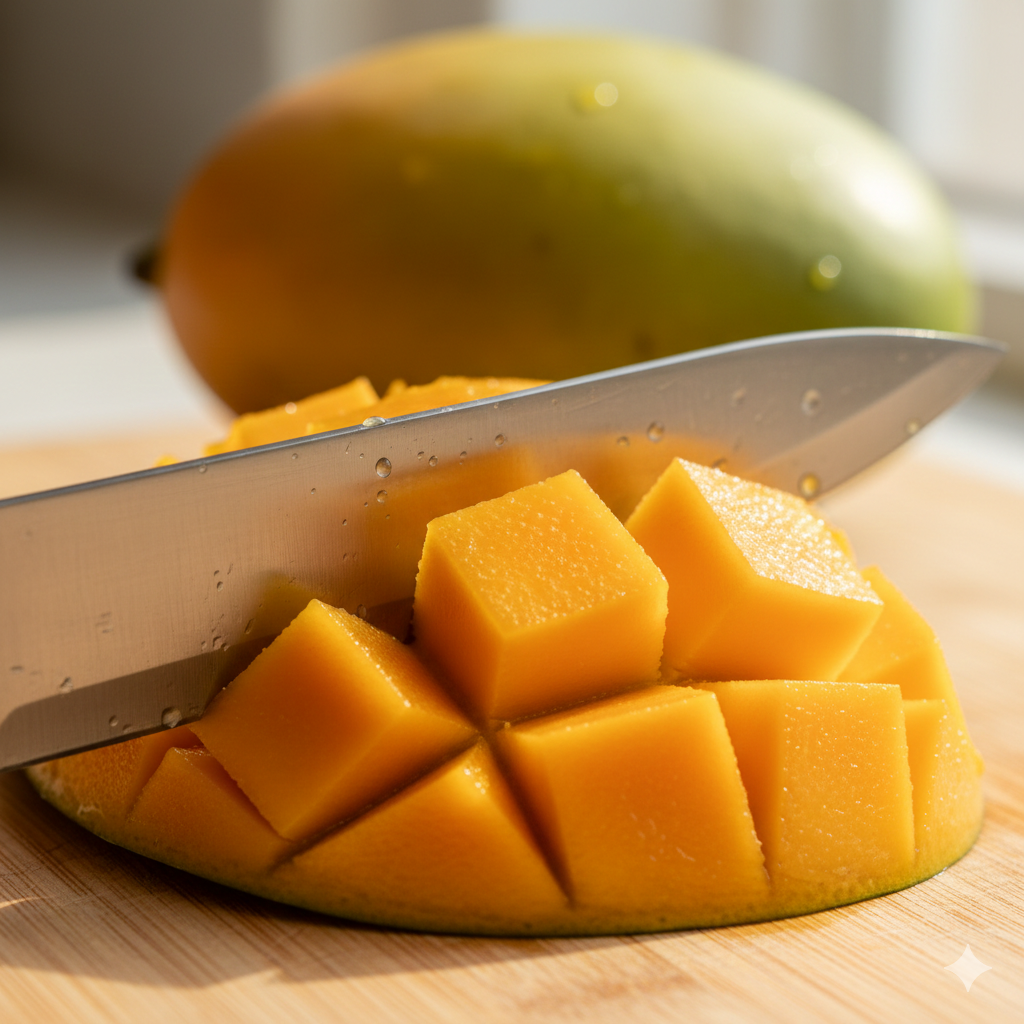
When you cut open a properly tree-ripened Valsad Kesar, the first thing you notice is the colour — that deep saffron-orange that looks almost painted on. Then the smell hits you. It's floral, warm, and just sweet enough to make you stop what you're doing. The flesh is firm but yields easily — no fibre, no strings, nothing to get stuck in your teeth. The pulp is thick enough to scoop with a spoon like custard.
The taste is honey-forward with an almost creamy finish. There's a tiny hint of citrus somewhere in the background, but it never tips into sourness. It just keeps the sweetness honest — stops it from being cloying. A ripe Valsad Kesar weighs between 200–300 grams, and honestly, eating one is less like eating fruit and more like eating a well-made dessert that happens to grow on a tree.
The carbide problem — and why it ruins everything
Here's something worth talking about honestly. A huge portion of the Kesar mangoes you'll find in local markets — even ones labelled "farm fresh" — have been ripened using calcium carbide. It's cheap, it's fast, and it's technically illegal in India under the Food Safety and Standards Regulations. But it's still widespread.
How do you spot a carbide-ripened mango? The skin turns uniformly yellow very fast. The colour is even, almost artificial-looking. The smell is faint or chemical. And when you eat it, the sweetness feels flat — like someone described sweetness to the mango instead of letting the mango develop it naturally.
A tree-ripened Valsad Kesar looks different. The skin might be slightly uneven in colour. There could be a small soft patch near the stem. The fragrance is unmistakable — you can often smell it before you've even cut it. That's what naturally developed sugars smell like. That's what you should be buying.
At Vanamrit, every mango on our farm stays on the tree until it's ready. We don't rush it. We don't need to. The fruit tells us when it's time.
When is the 2026 Valsad Kesar season?
Good news for this year — the 2026 mango season is shaping up to be a strong one. Early flowering across Gujarat in late 2025 was reported at around 60%, well ahead of the usual timeline, and farmers noted predominantly green flowering in many areas — which has a higher fruit-setting rate than red flowers. If the weather plays along, we could see early Kesar arriving by mid-to-late April 2026.
For Valsad Kesar specifically, the window runs from May through July, with June and July being the absolute peak. That's when the fruit has had the full season to develop, the sugars are at their highest, and every bite is as good as it gets. May is good. June is great. Mid-June to mid-July is when you'll want to be ordering.
Don't fall for the early-season rush. The mangoes that hit markets in April and early May are usually from trees that flowered earliest and carry the most commercial pressure. The truly memorable Valsad Kesar — the ones that make you close your eyes when you eat them — come a few weeks later.
How to store and ripen your Kesar mangoes at home
If your mangoes arrive slightly firm (which they should if they've been shipped fresh from the farm), here's what to do. Keep them at room temperature, out of direct sunlight. Do not put them in the fridge straight away — cold temperatures stop the ripening process and can damage the cell structure of the flesh, leaving you with a mealy, tasteless mango.
Once they develop a gentle give when you press near the stem — not mushy, just yielding — and the fragrance becomes noticeable from the skin, they're ready. Then refrigerate for two hours before eating. That cold makes the sweetness more pronounced, the flesh firmer, and the whole experience significantly better. Eat within two to three days of reaching full ripeness.
One more thing — don't wash and cut them in advance. Once you break the skin, the oxidation starts and the fragrance fades quickly. Cut it, eat it, immediately. That's the Kesar philosophy.
Get more deatil How to Ripen Mangoes at Home read our artical
Five things you can make with Valsad Kesar (besides eating it straight)
Look, eating it straight with a spoon over the kitchen sink is honestly the best way. But if you want to be slightly more civilised about it, Kesar is one of the most versatile culinary mangoes in existence. Its thick, fibreless pulp and high sugar content mean it needs almost no help from a recipe.
Aamras is the obvious choice — just blend the pulp with a pinch of cardamom and serve with hot puris. The Gujarati way. Non-negotiable in summer. Mango shrikhand is almost effortless: fold Kesar pulp into hung curd, add a little saffron, and the dish basically makes itself. Mango lassi with Kesar needs barely any added sugar because the fruit does all the work. For something more indulgent, Kesar ice cream made with full-fat cream and pure mango pulp is better than anything you'll buy in a shop. And if you want a drink that feels like summer in a glass, fresh mango juice made from Valsad Kesar — no water, no sugar, just blended pulp — is something you'll remember for months.
How do you know if your Kesar is genuinely tree-ripened?
This is the most important question you can ask, and most sellers won't answer it directly. A genuinely tree-ripened Kesar mango has three tells. First, the skin colour is uneven — golden-yellow in patches, sometimes with a faint green tinge near the stem. Second, the fragrance is detectable through the skin before you cut it. Press your nose close and breathe in. If you smell mango, it's real. If you smell nothing, or something chemical, walk away. Third, the shoulder of the fruit — the area just below the stem — is full and slightly rounded, not sunken or flat.
Carbide-ripened mangoes look uniformly beautiful and smell of almost nothing. They've been forced to turn colour before the sugars had a chance to develop properly. The skin changed, but the inside didn't catch up. You get the appearance of a ripe mango and the taste of a promise that wasn't kept.
Can you freeze Kesar mango pulp?
Yes, and it's one of the best things you can do to extend the season past July. Peel and deseed your mangoes at peak ripeness, blend the pulp smooth, pour into airtight containers or ziplock bags, and freeze flat. Frozen Kesar pulp keeps for up to six months without losing much of its character. You won't get the fresh-cut experience back, but the sweetness holds remarkably well. Come October, when the craving hits and the season is long gone, that frozen pulp in your shrikhand or smoothie will feel like a very smart decision you made in June.
Is Valsad Kesar better than Gir Kesar?
Honestly? It's the wrong question. It's like asking whether a mango grown in Devgad is better than one from Ratnagiri. They're the same variety shaped by different land. Gir Kesar has the GI tag, the global recognition, and the prestige — and it deserves all of it. The dry Saurashtra climate gives it an intensity and sharpness that's undeniably exciting.
But Valsad Kesar has something else. It has the quiet confidence of a fruit that doesn't need to prove anything. It's grown in some of the most fertile coastal soil in India, harvested by farmers who've been doing this for generations, and it delivers a sweetness that is deeply, unshakeably consistent. It's more approachable, slightly more mellow, and — if you're being honest about which one you'd eat three of in a single sitting — probably the answer is Valsad.
The real question isn't which is better. The real question is: have you tried both? Because if you haven't, you're only getting half the story.
This 2026 season, our Valsad Kesar orchard is looking strong. The flowering was early, the weather has been kind, and we're expecting some of the best fruit we've had in years. Pre-book your box now — peak season won't wait for you.